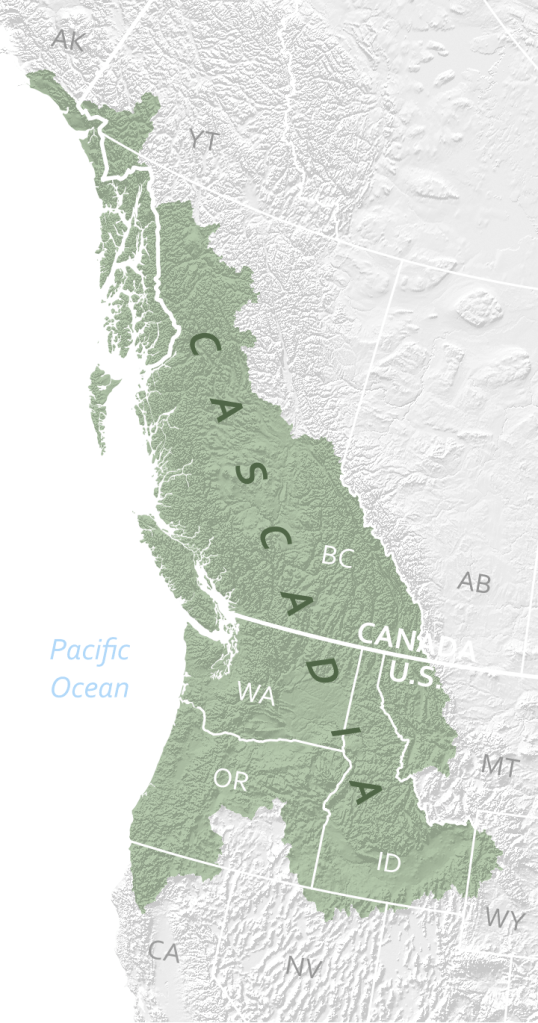
The Cascadia Project is a wide-ranging investigation of and engagement with online digital archives of the Cascadia bioregion (Northern California, Oregon, Washington and British Columbia). The project uses the historic photographs from these archives in photo-montages and digital (single and mult-channel) video installations to render a diasporic landscape from the existing photographic record. The Cascadia Project treats the archival record as a cultural landscape of the region and as a record of its making. It views these historical recordings as strata in a geological map and uses photographic and cinematic montage to portray the layering of those strata. The project gives historical context to modern and postmodern photographic projects that engage the cultural landscape such as Vancouver’s photo-conceptual scene of the 1970s and the contemporaneous photographic projects of Robert Adams and Lewis Baltz. I chose the subject of the Cascadia bioregion because of my personal history as the progeny of California gold-rush era settlers and my participation in the 70s photo-conceptual scene in Vancouver, B.C.. Having lived on both sides of the Canadian/US border, I feel a special kinship to a region that crosses that border. The Cascadia region is especially suited for my investigation because of the compressed time frame from first contact of Europeans by people of the First Nations, especially in the northern reaches of the region and their rapid colonization and settlement of native lands, much of which occurred during the photographic epoch. Finally, The Cascadia Project is about place and locale. It is purposely regional and pays careful attention to the sensibilities of those who call it their home.
“The idea of an autonomous state along the Pacific coast dates back hundreds of years to when the area was first being explored. It was originally envisioned by Thomas Jefferson after he sent Lewis and Clark into the Pacific Northwest in 1803. When Lewis and Clark first arrived, they found a densely populated and diverse region. Before 1800, it is estimated that more than 500,000 people lived within the region in dozens of tribes such as the Chinook, Haida, Nootka and Tlingit.
It was during these early years of exploration that the root of term Cascadia first came into being. It is credited to Scottish naturalist David Douglas, after whom the Doug Fir was named, and who explored the region in depth throughout the 1820’s. While he was searching for plants near the mouth of the Columbia gorge in 1825 he was struck by the areas ‘cascading waterfalls’. As he writes in his journals he talks in depth about the mountains by these ‘great cascades’ or later, just simply the Cascades, the first written reference to the mountain range that would later bear this name.” – An Early History, Cascadia Now!
Cascadia (Restore Celilo Falls), 2025, HD Video, 8:55 min
America’s First Nations have been fishing for salmon between The Dalles and Celilo Falls on the Columbia River for as long as 11,000 years. The stretch of river between The Dalles and the falls was said to be the greatest fishery on the entire Columbia.
In addition to providing a bountiful and predictable source of salmon (and other fish, including sturgeon, steelhead, and eels), the area around Celilo Falls became the center of a First Nations trading network that stretched to British Columbia in the north, California to the south, and east as far as the Great Plains.
In 1957, Celilo Falls was submerged under 60 feet of water by the recently completed Dalles Dam, in order to provide hydroelectric power to the rapidly growing postwar settlement along the Columbia. Recently, in the wake of the removal of dams along the Klamath River to the south, a campaign to restore Celilo Falls has begun. Memories of Underdevelopment, with its photographs of the Gorge circa 1869-1900 and 1950s era images of local Indigenous men fishing from platforms over the falls, is dedicated to that movement.
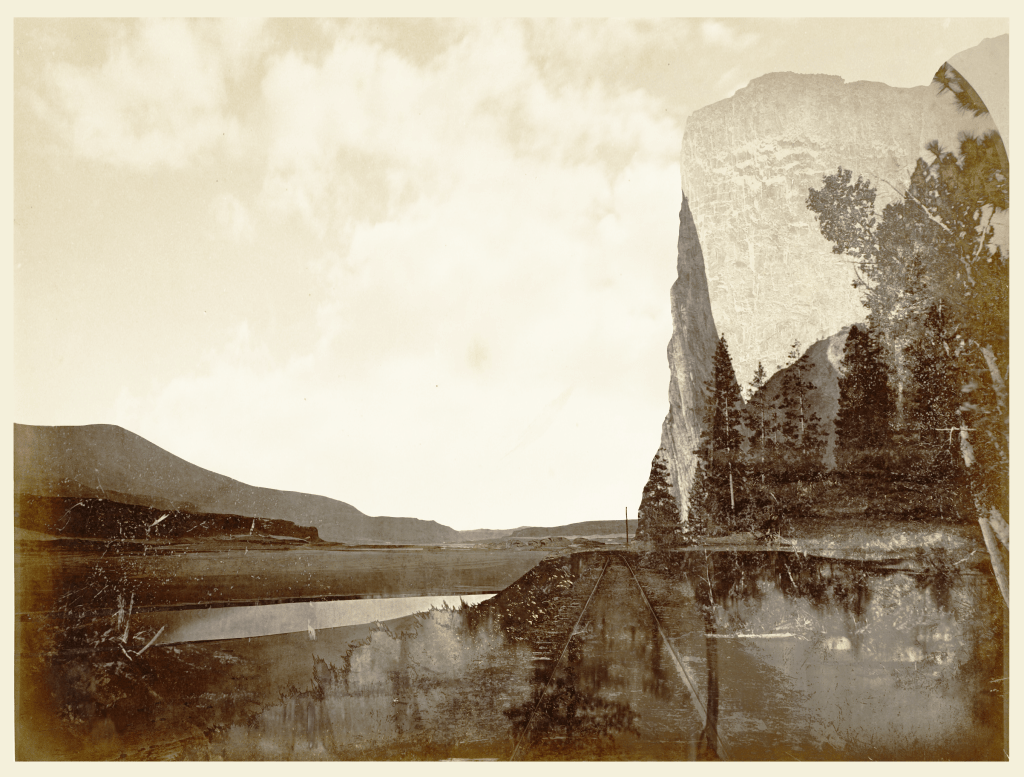
Looking Back (After Carleton Watkins’ Cape Horn near Celilo), 2024, archival print, 36×48 inches
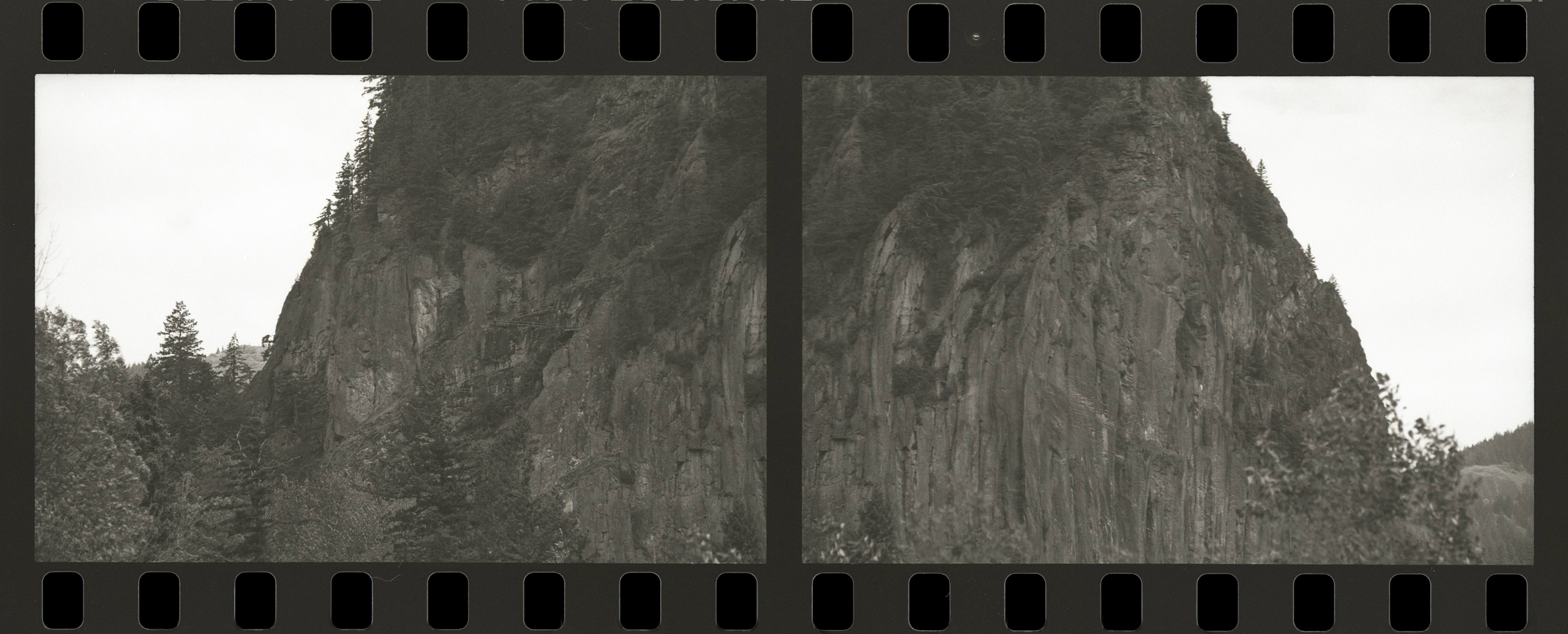
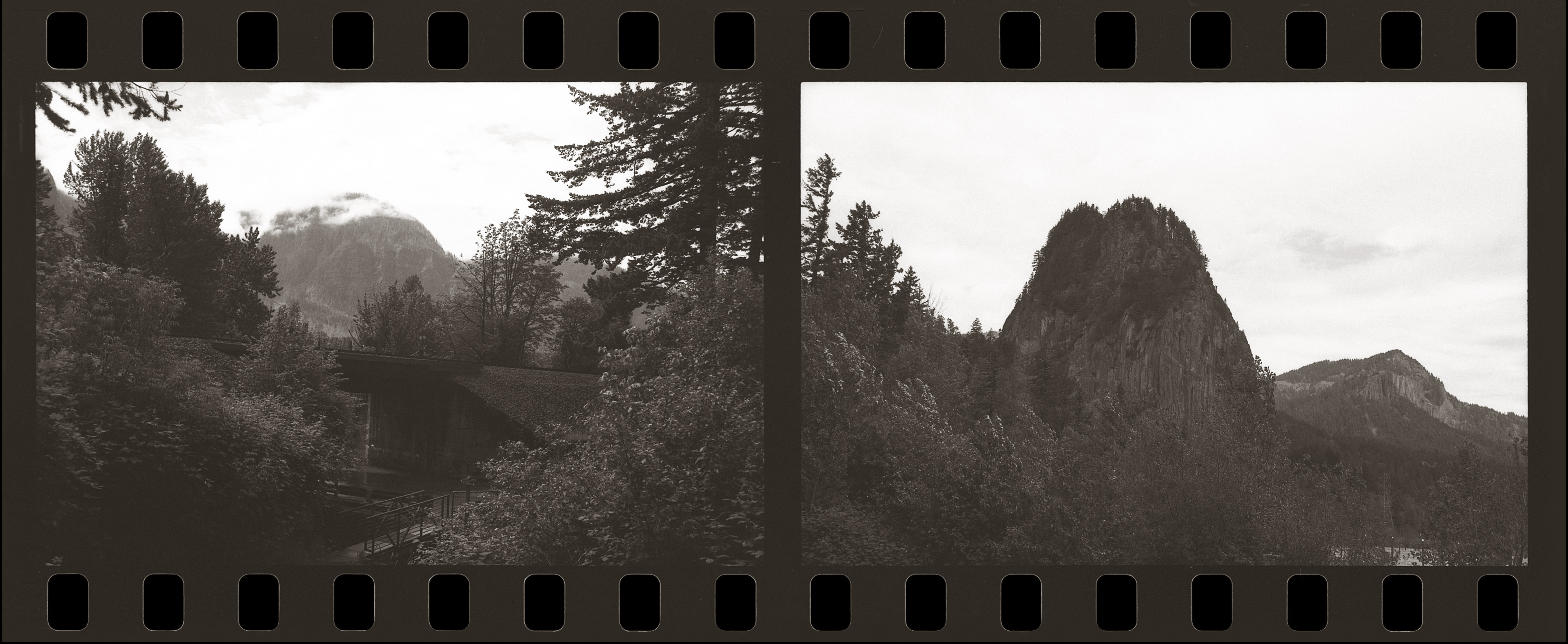
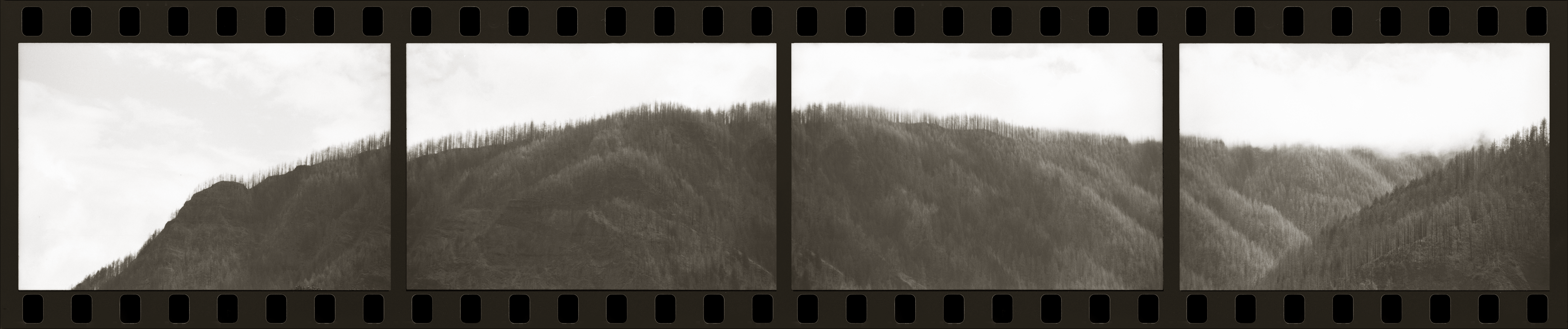
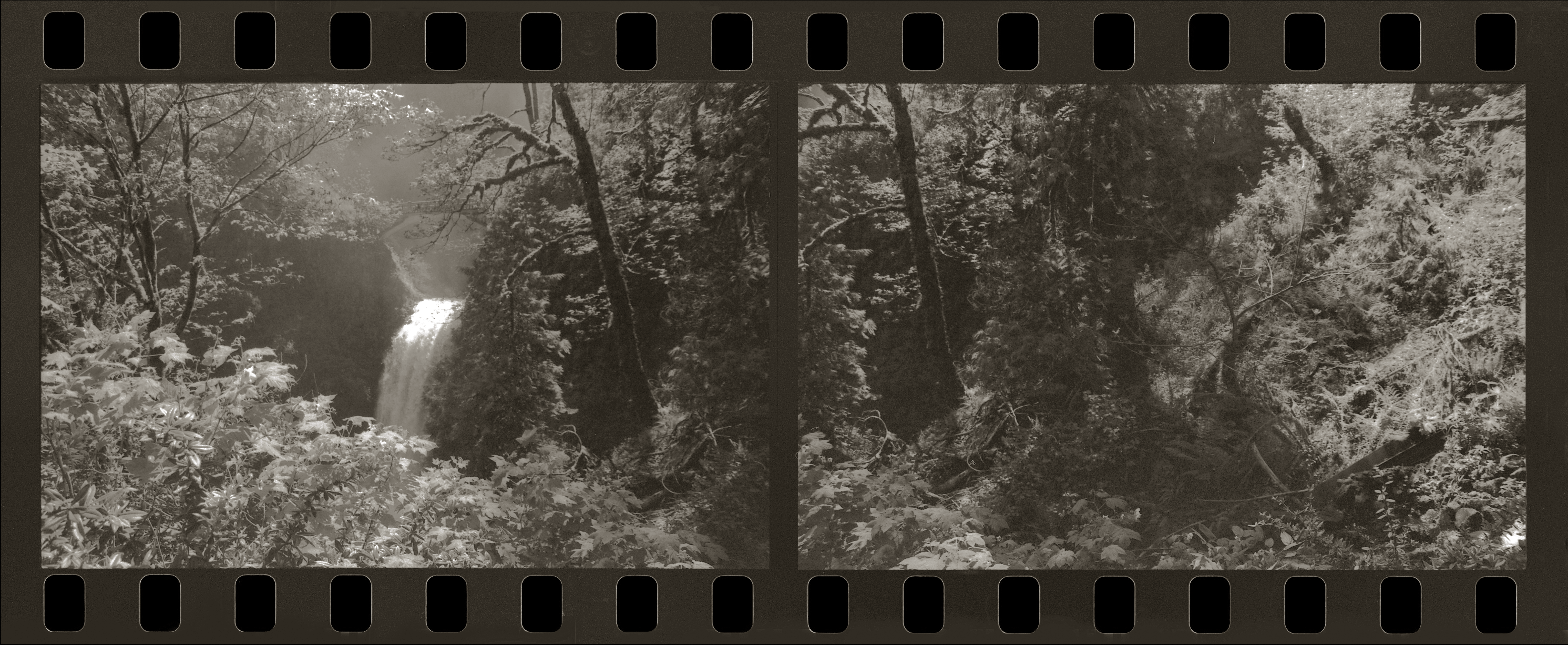
Click on grid above to view slide show
On Mount Rainier, 2025, HD video, 4:27 min.
Early in her illustrious career, before moving to San Francisco in 1917, Imogen Cunningham worked as Edward Curtis’ assistant at his photographic studio in Seattle. In 1905, Cunningham photographed her husband, Roi Partridge, a Seattle artist, in the nude near a small alpine pond on Mount Rainier. This series, titled On Mount Rainier, caused a minor scandal in Seattle at the time, but foreshadowed Cunningham’s bold, ground-breaking oeuvre. One critic wrote that these photographs were “vulgar” and charged her with being an immoral woman, but Cunningham stated that, “It didn’t make a single bit of difference in my business. Nobody thought worse of me.”
In researching historical photography of the western United States and Canada, it became abundantly clear that this was a man’s world. Cunningham was not only a photographic pioneer, but continued to blaze trails throughout her career as a photographic modernist alongside her male peers like Ansel Adams and Edward Weston.
Photographs by Imogen Cunningham. Score: Mi Teresita (Little Waltz) composed by Teresa Carreño, 1898
Vignette, 2025 HD video, 6:41 min.
The original subject of The Cascadia Project was 19th and early 20th century western landscape photography and its relationship to the Vancouver photo-conceptual movement of the 1970s–a conceptualism that viewed that landscape through the framing of the city.
I saw our work of that era as an attempt to represent a cultural landscape through photography. My research for The Cascadia Project was focused on Cascadia region resources such as fishing, lumber, minerals, etc. which, through settler colonialism, created a new cultural landscape at the expense of the Indigenous People of the region.
I first encountered the photography of Norman Caple while researching images of salmon shing on the website of The City of Vancouver Archive. The photograph Fishing Fleet at the mouth of the Fraser River, (1904), with the printer’s instruction, “Vignette,” scratched into its emulsion, caught my attention, because it had the accidental photographic narrative I often sought in my own work. Unfortunately, the digitized image on the site wasn’t attributed to Caple. It was years before I discovered the extent and depth of the story Caple’s work would tell.
Many of Caple’s photographs depict the wooden bridges built in the push to complete Canada’s transcontinental railroad. The second decayed image I found showed the original wooden structure of the Revelstoke Bridge. I was now searching for these vignetted images, but was still unaware of the extent of Caple’s work. I worked with his images of the fishing fleet and the Revelstoke Bridge for years, manipulating them in every which way with little success.
Caple was one of a number of photographers to record the passion play at St. Mary’s Residential School at Mission B.C. in 1894. When I found his images of Indigenous children arriving at the Mission School by train and the subsequent images of the passion play, a narrative revealed itself. It became clear that the purpose of my archival research was to uncover latent narratives that were not available to early photographers like Caple. Quite by accident, Caple’s images of railroad bridges and the Residential School at Mission B.C., had been rendered by time into dark vignettes of colonial power.

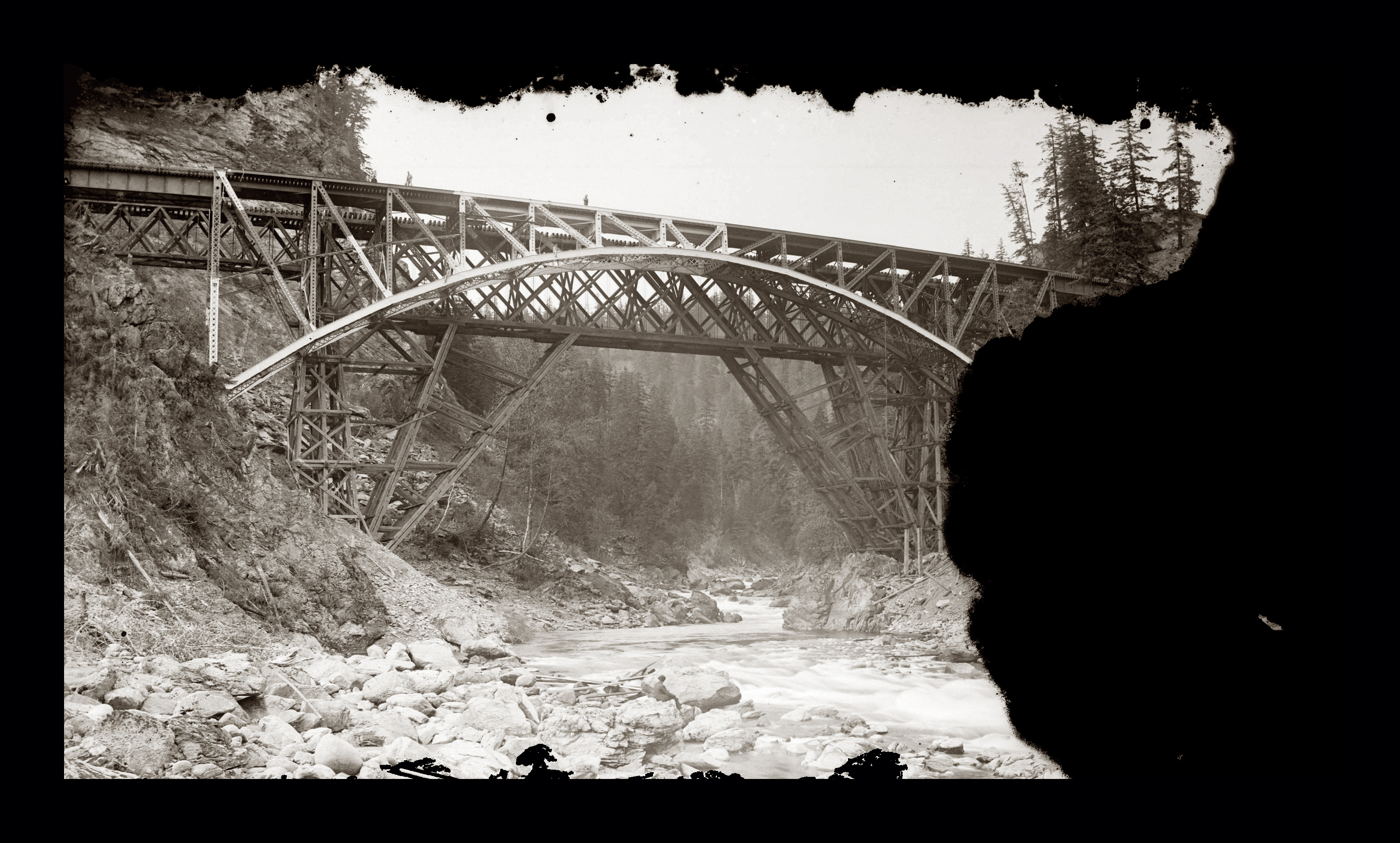


Click on the grid above for a slide show
Selections from The Goldberg Variations, 2025, HD video, 18:03 min.
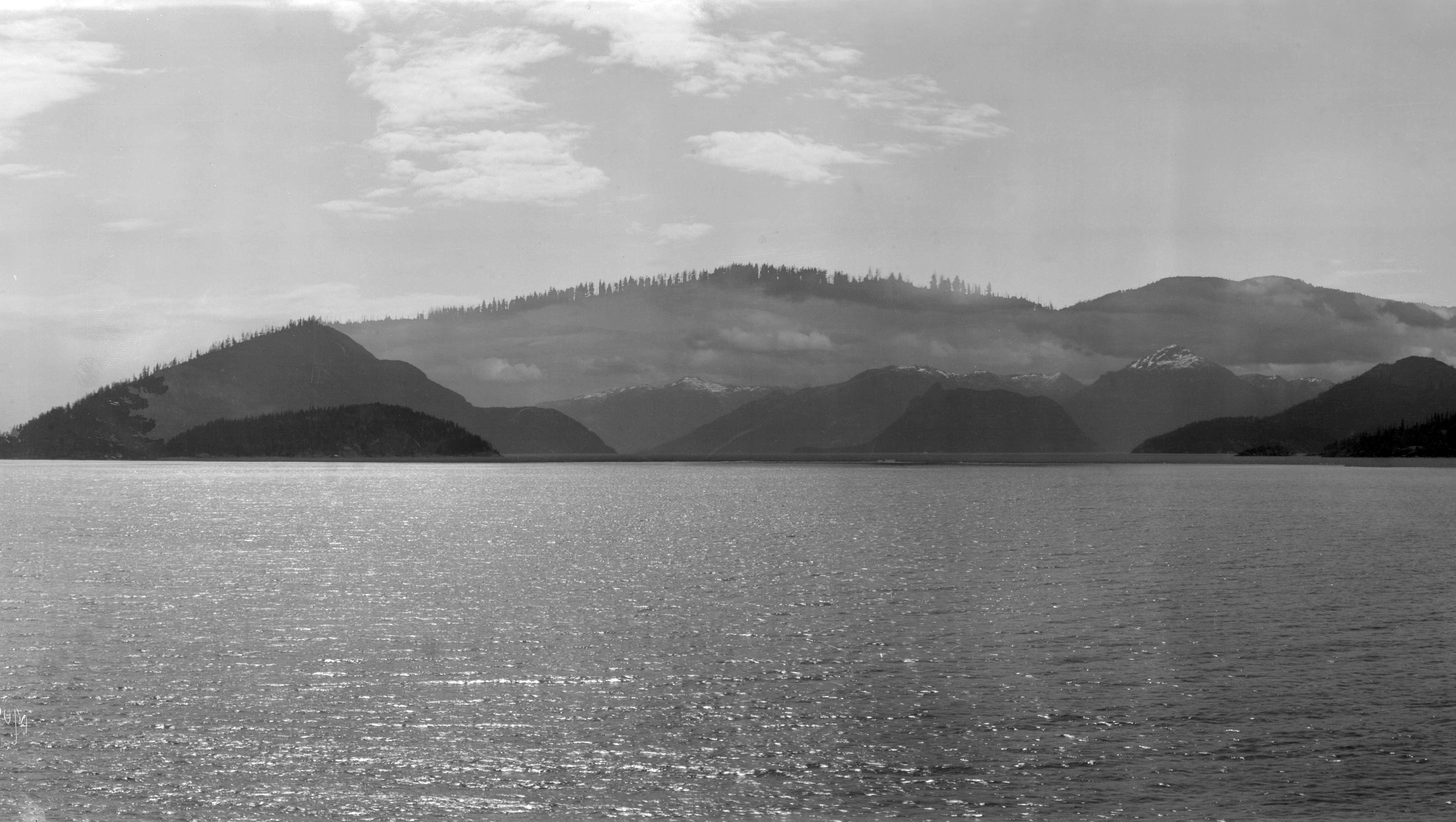
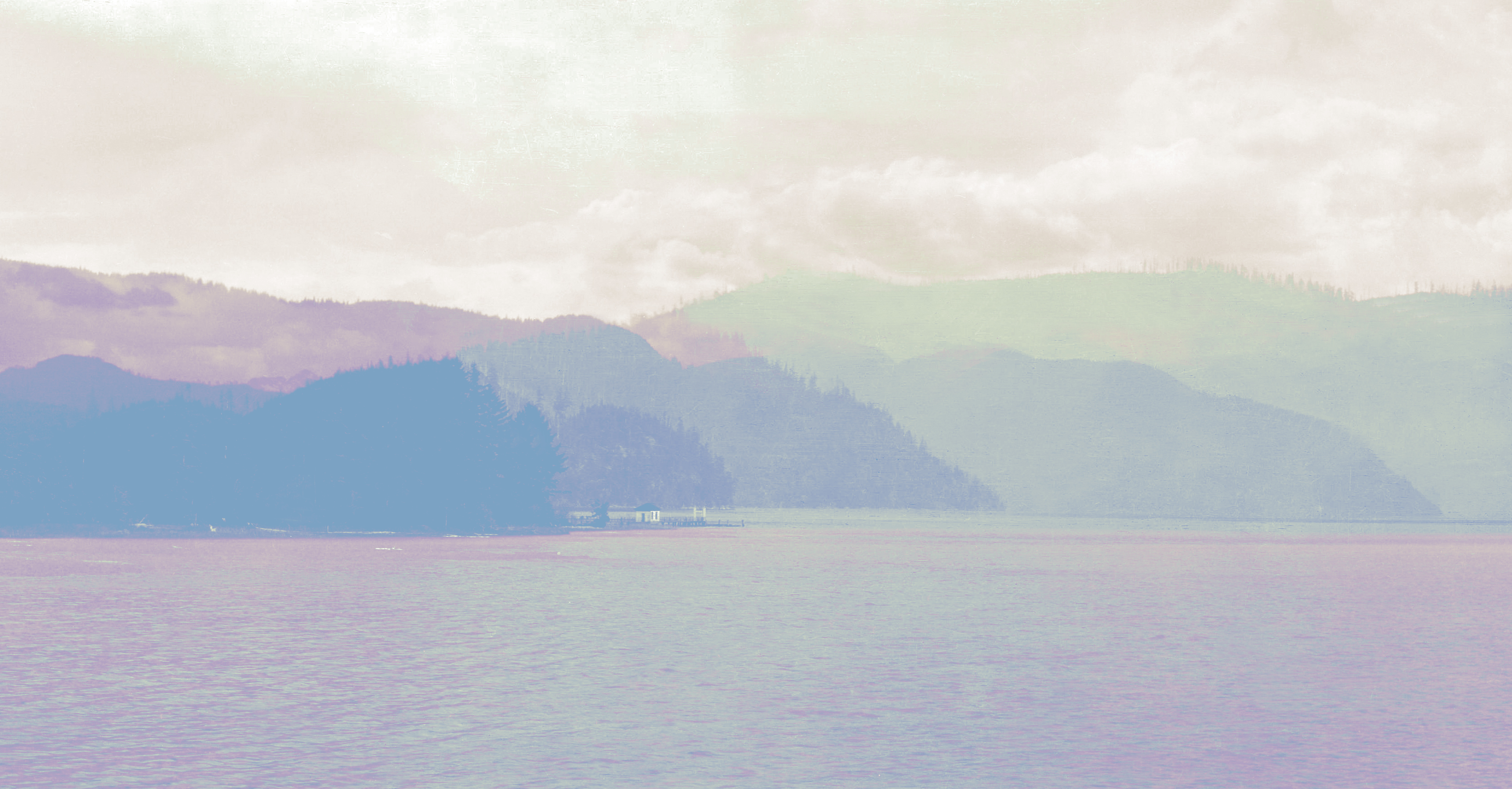
Selections from The Goldberg Variations brings together the iconic performance of Bach’s The Goldberg Variations by Glenn Gould with visual variations of Moore’s panoramic images of Vancouver B.C. in the first decades of the 20th century.
W. J. Moore was born in 1887 in Bryson, Quebec, one of eleven children of James and Elizabeth Moore. The family moved to De Winton, Alberta when Moore was in his early teens. By 1911 he had found work with commercial photographer Byron Harmon in Banff, Alberta. Harmon married Moore’s older sister Maude in 1907 and it is quite possible that Moore received his early photographic training from him. He bought a Kodak No. 8 Cirkut Outfit in 1913 and incorporated panoramic photographs as a specialty within his business, producing most of his work with this format in the first fifteen years of his career.




Click on grid above to view slide show
 Bill Jones | studio